





| Treasury
top of the breadtree - Independent Theater Hungarytop of the breadtree
a kenyérfa csúcsa
A roller coaster for three voices.
Szilvi, Kriszti and Viki are searching for their own path in the dense forest of adulthood.
In the midst of successes and failures, and changes of direction, the biggest challenge is not reaching the finish line, but avoiding losing ourselves and each other.
The Top of the Breadfruit Tree is a heartbreakingly funny coming-of-age story about togetherness, distance, re-planning and the invisible rubber band that pulls us back into our shared past even when we thought we had moved on.
Where do we end up when we leave everything behind?
And what remains of us?
„This one stayed at home and then went far away.
This one dreamed of a prince who was eventually eaten by a wolf.
This little one cleaned up nicely.”
Creators
trailer
Background
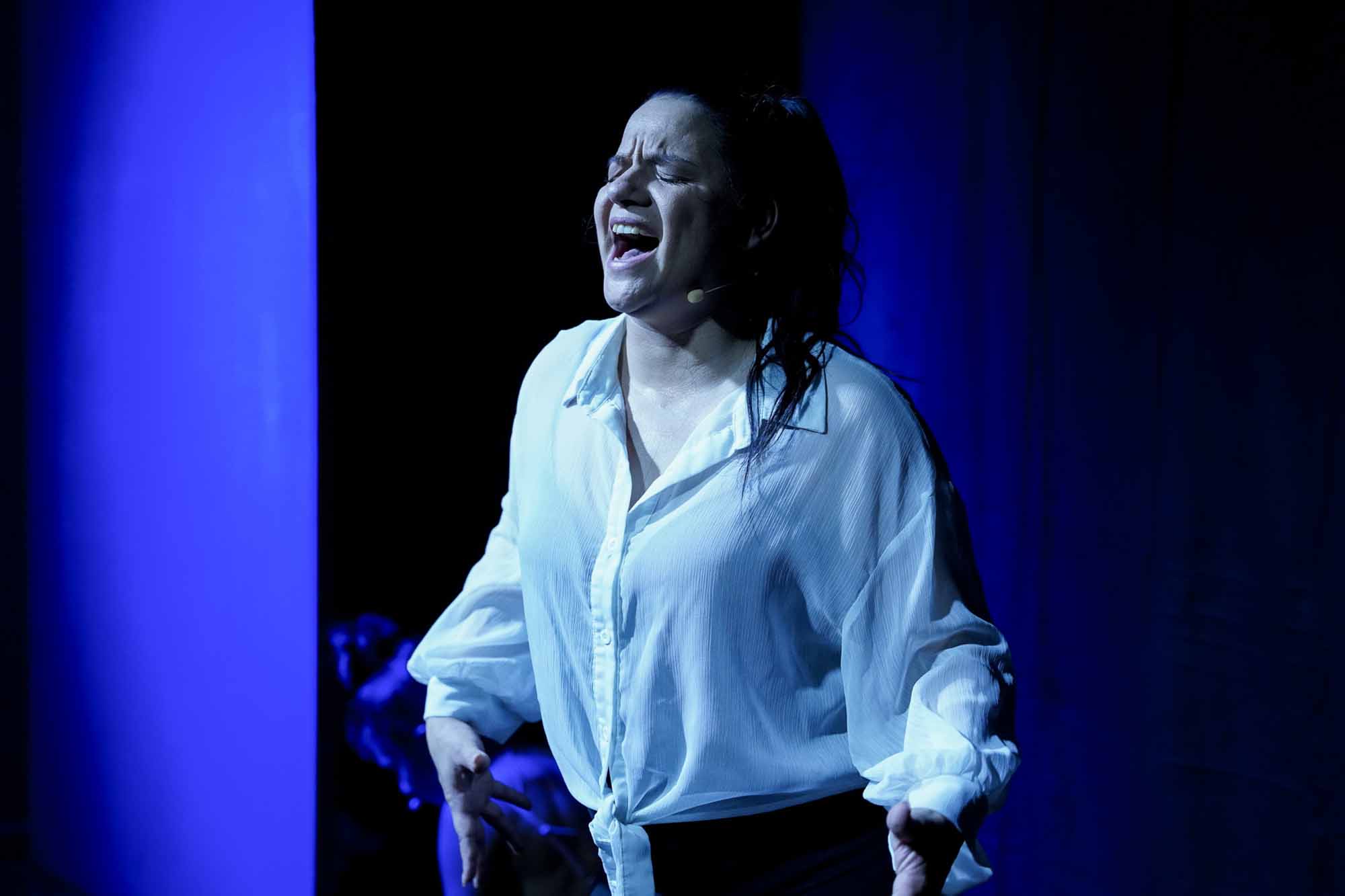
The „Top of the Bread Tree” is inspired by real stories of young Roma and non-Roma people collected by workshops on social mobility implemented in various student groups facilitated by peer trainers. The play was also inspired by studies on social mobility.
The play presents the story of three young girls from their early childhood to their young adulthood. Szilvi and her little sister Viki are Roma living in a rural house with lots of trees. When the small Viki asks her sister what kind of trees are in the garden Szilvi answers related to one she doesn’t know is a bread tree. The innocent lie leads to an accident when Viki wants to please the neighbor girl, Kriszti – who is non-Roma but even poorer than the Roma sisters – when she wants bread and tries to climb on the said bread tree. Finally Szilvi says it is not a real bread tree. She falls down and breaks her arm. Later on during the play the bread tree becomes a symbol of social mobility, when you are climbing on a tree and sometimes you can’t reach your aims.
After the colorful and wild childhood of the three girls full of imagination and adventures during their adolescence they go to a party where Kriszti becomes a victim of sexual abuse.
Focus scene
Reviews
“The Top of the Bread Tree” reveals what the promise of self-actualization and upward social mobility truly means for those whose quality of life is primarily defined by their social environment.This production by Independent Theatre Hungary presents the audience with a long chain of seemingly mundane events: childhood games, love and envy, the search for identity during the teenage years, laughter, and violence. The performance alternates between dialogue and narration, giving the structure a loose, documentary-like quality. One of the production’s greatest strengths is its apt—and frequently self-deprecating—humor; without it, the scenes could easily have fallen into the trap of oppressive pathos. While the comedy is inherent in the text, the three actors deserve even greater credit: through their facial expressions and subtle, borrowed gestures, they add nuanced layers, signaling—with an almost knowing wink—that one must be able to laugh at oneself.
REVIZORONLINEDuring this hour and a half, the fourth wall comes crashing down as well: we are present not as spectators, but rather as participants, thereby asking ourselves the question:
How far will we allow our boundaries to be pushed, and when will we say, enough is enough?Has saving ourselves ever even been a goal?
And if we ultimately decide that it will be, at what cost will we achieve it?
ROMAPLAYMaterials to read
excerpts from the playIN ENGLISH
photo credits
All rights reserved
*left -> right*
1: ©Clara Anicito_Emília Boda-Novy
2: ©Clara Anicito_Emília Boda-Novy, Nóra Nemcsók
3: ©Clara Anicito_Nóra Nemcsók, Ramóna Farkas
4: ©Clara Anicito_Ramóna Farkas, Emília Boda-Novy
5: ©Clara Anicito_Ramóna Farkas
6: ©Clara Anicito_Ramóna Farkas, Emília Boda-Novy, Nóra Nemcsók