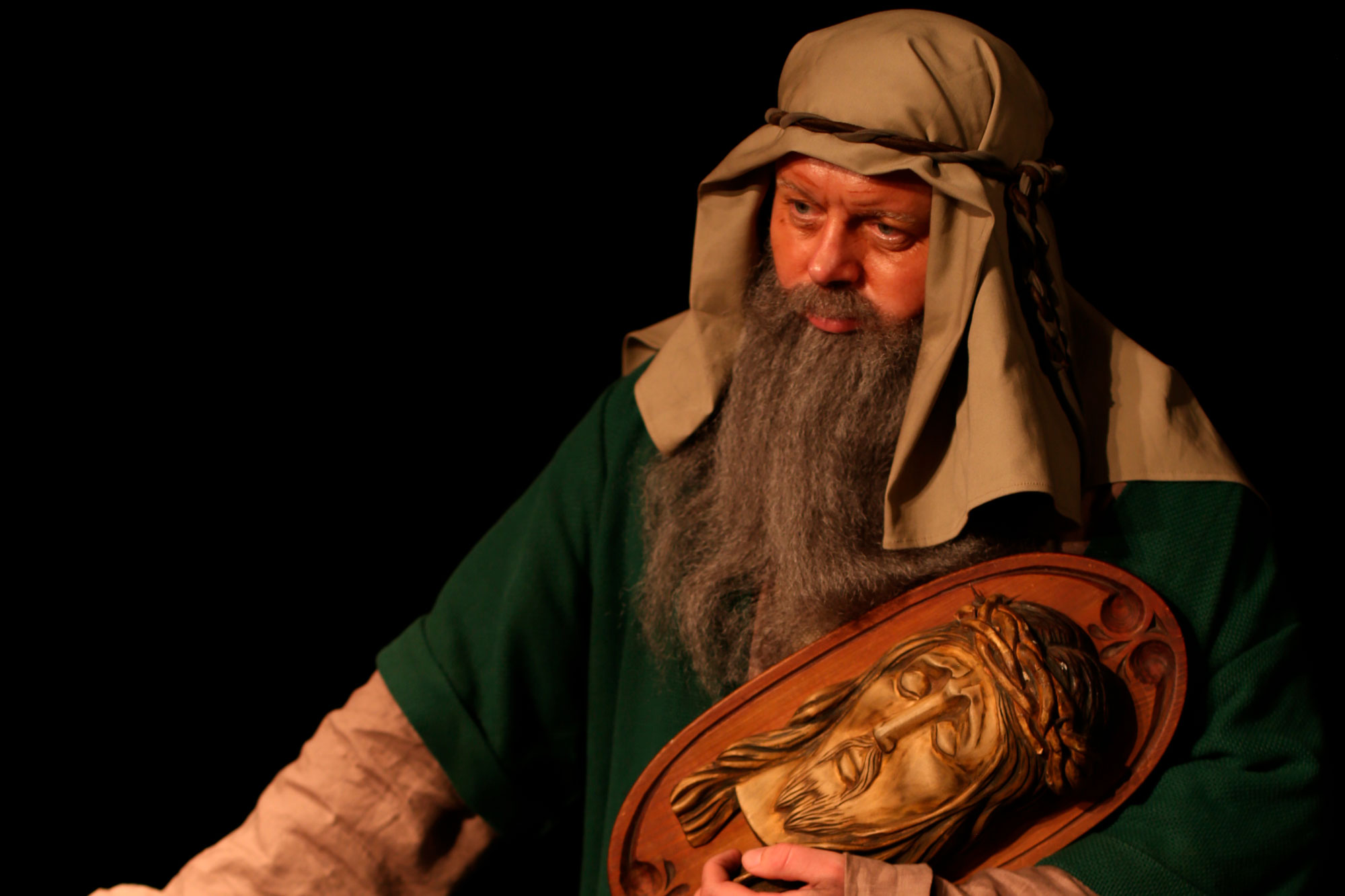
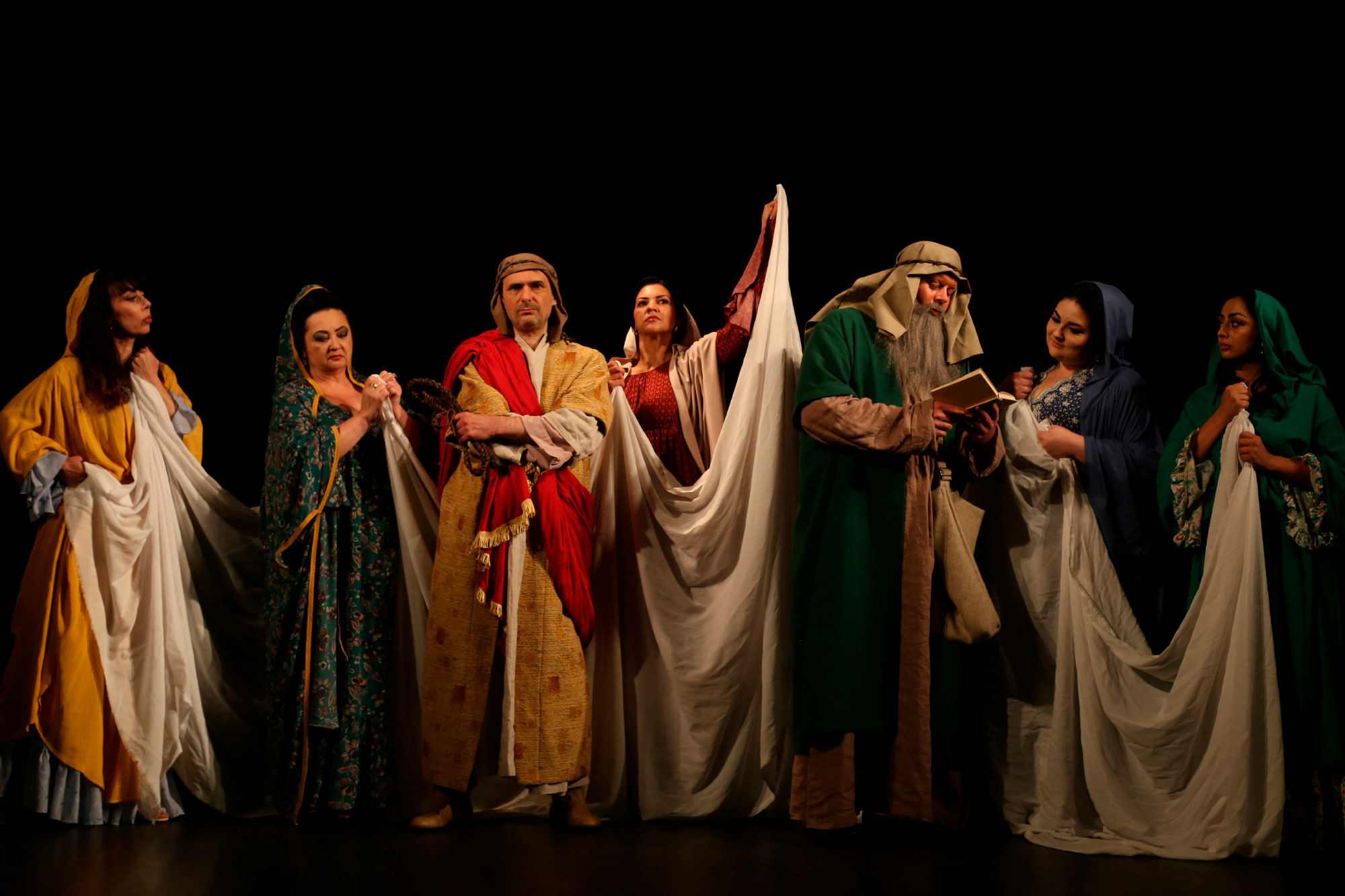
The Romance theatre company created the performance in memory of the Roma victims of the Second World War. The Leader does not only tell about the Roma and is not exclusively for the Roma. The play depicts the inner life of people and reflects on the battle of good and bad powers. There are positive stories about feelings, right actions, self-sacrifice, since love and sympathy can serve as a refuge in the most difficult times, too.
"What was it like before? Two people fighting, and the third one lives his life. That’s how we Gypsies used to live, on the sidelines. It won’t be like that anymore. We have to share in other people’s sorrows. In that way, our problems will also be shared by others. And I feel that that time is coming."
2020, IV. International Roma Heroes Festival, Budapest, Hungary (online performance)
trailer
Background
The play The Leader is based on the novel entitled Caravan written by Zaharia Stancu and it shows the challenges a Roma community faced during World War II in Romania and Ukraine. The South-Western part of Ukraine was occupied by Romania in 1941. The area between the Dniester and the Bug River was constituted the so-called Transnistria Governorate. The Antonescu Regime started to deport Roma from Romania and Bessarabia to Transnistria in 1942. The deportation waves sent nearly 25,000 people across the Dniester River – close to 12% of the total Romanian Roma population. In the summer of 1942, the so-called “nomadic” Roma groups were subjected to deportation proceedings, but later the deportation order was extended also to the ones deemed ‘asocial’. Many Roma rode on their own horses and in wagons, which were also confiscated from them according to the order of Georghe Alexianu, governor of Transnistria. In Transnistria they were obliged to paid labor officially but in fact, after being deprived of their possessions, they were left alone with no food, clothes, medicines, or any other essentials. In the following years thousands of Roma people died during the deportation, and only around 14,000 out of the deported 25,000 survived. Approximately 36,000 Roma fell victims to Antonescu’s regime.
In Eastern Europe other genocides were realized by local regimes and different national governments, too. These mass murders were not committed directly by the German Nazis, but other European nations and governments.
The plot is based on real events, but it is unclear where the action takes place – somewhere in Romania, or in Babi Yar in Kiev. The performance has gone beyond geographic boundaries. The main purpose was to show what role an individual in history can have – no matter if it is the history of the whole world, or the fate of ordinary lovers. One person – in this case, a German soldier, a tiny "screw" of a gigantic military colossus, reads out an order "to destroy" a Gypsy camp – people as human as him, only different in blood. Another person – the leader of the camp, needs to be saved from his fellow tribesmen. No matter what. Then we observe the metamorphoses of the characters because war is a magnifying glass. Colossal stress, hunger, fear of death. Such circumstances reveal, make all the qualities of human nature more prominent – both dignity and vices.
The Gypsy Music and Drama Theatre "Romance"
The theatre was established in 1994. It is the first and only professional national Gypsy theatre in Ukraine, creating in various genres like classical romance, musical drama, and national folklore. During its existence, solo concert programs, performances, thematic evenings, based on the best examples of uncommon and original musical Gypsy culture, were presented to the audience not only in Ukraine but in many countries of the world: Russia, Belorussia, Israel, the USA, the Czech Republic, Poland, Hungary, Austria, Costa Rica, Norway.
In 2003, the staff of the theatre received the state status. The theatre earned the right for it by its high professionalism, creative achievements and important social activity.
The “Romance” is a creative and intellectual center, around which highly professional representatives of Gypsy art unite. It is famous for its achievements and success in many countries of the world. While collaborating with art agencies of Ukraine and different foreign countries, the theatre focuses on theatre production, aesthetic development and the professional education of the talented Gypsy youth.
For the worthy contribution to the development of the multinational culture of Ukraine, the “Romance” and Igor Krikunov, director of the theatre since its foundation till 2021, were awarded with the Order of Nikolai Chudotvorets “for increase of good and piece on the Earth” by the Committee of International Awards.
Focus scene
MATERIALS TO READ
EXCERPTS FROM THE PLAY
In case you would like to request availability to the full play and/or the full video about the performance, write an email to info@romaheroes.org and describe the aim of your request!